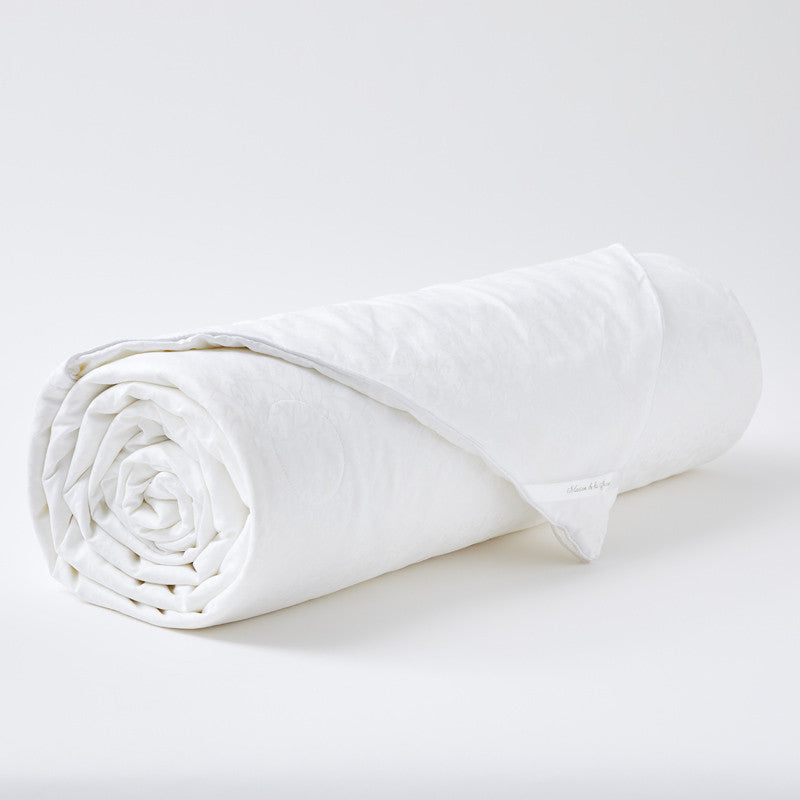
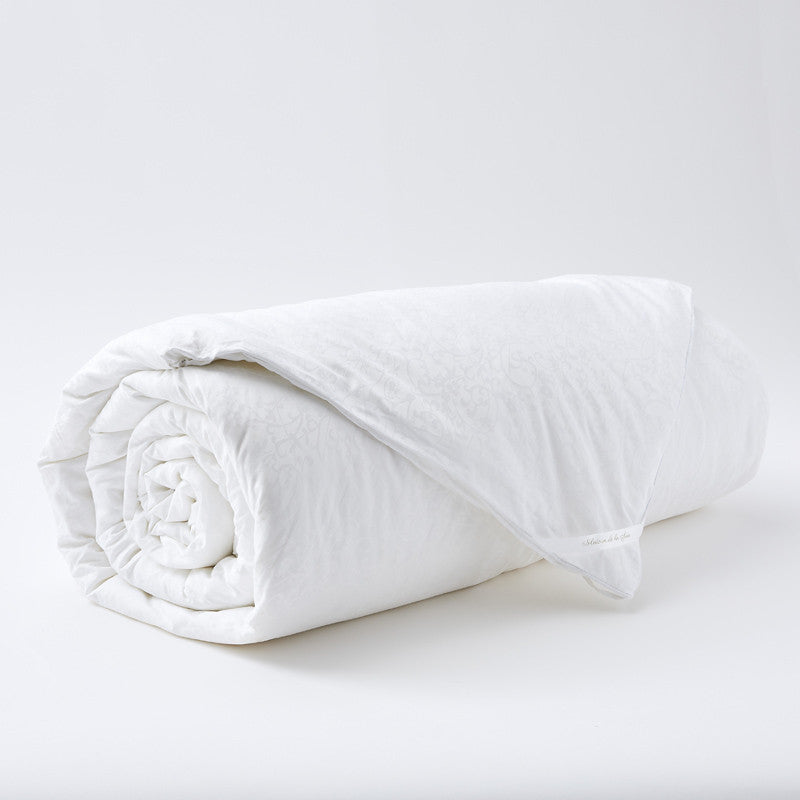
The Making of Silk Duvets
Rooted in an ancient Chinese tradition, the crafting of natural silk requires true expertise and draws on knowledge and techniques that have been passed down from mother to daughter for centuries.
The production of our duvets meets high standards, ensuring that you are purchasing a premium-quality product, crafted with care and in accordance with the “rules of the art.”
But before delving into these traditional manufacturing techniques, let’s take a moment to consider the quality and origin of the raw material.
The Finest Silk
Just as with goose or duck down, there are different grades of silk. Obviously, not all are created equal. Some manufacturers—and not the least prominent ones—use poor-quality cocoons, or, in some cases, simply “silk floss” made from the residues of the silk carding process.
For the filling of our duvets, we use only the highest-quality Grade A cocoons from mature Bombyx mori silkworms fed exclusively on white mulberry leaves. White mulberry leaves enable the silkworms to produce silk of exceptional quality.

Silk Production & Cocoon Processing

Next comes the process of carding the silk, which produces long, fine white fibers that, once stretched, give our products unparalleled softness and coverage.
Layering
The photo below shows the crucial step in the manufacturing of silk duvets, which involves stretching and evenly spreading a large number of layers of silk across the entire surface of the duvet.
These long, interwoven silk fibers are then secured with spot stitching, which allows the silk to breathe and provide optimal thermal properties.
The result of this labor-intensive, handcrafted process is worlds apart from quilted silk duvets, which are largely mass-produced using machinery and made from raw materials of far inferior quality.

The Final Assembly
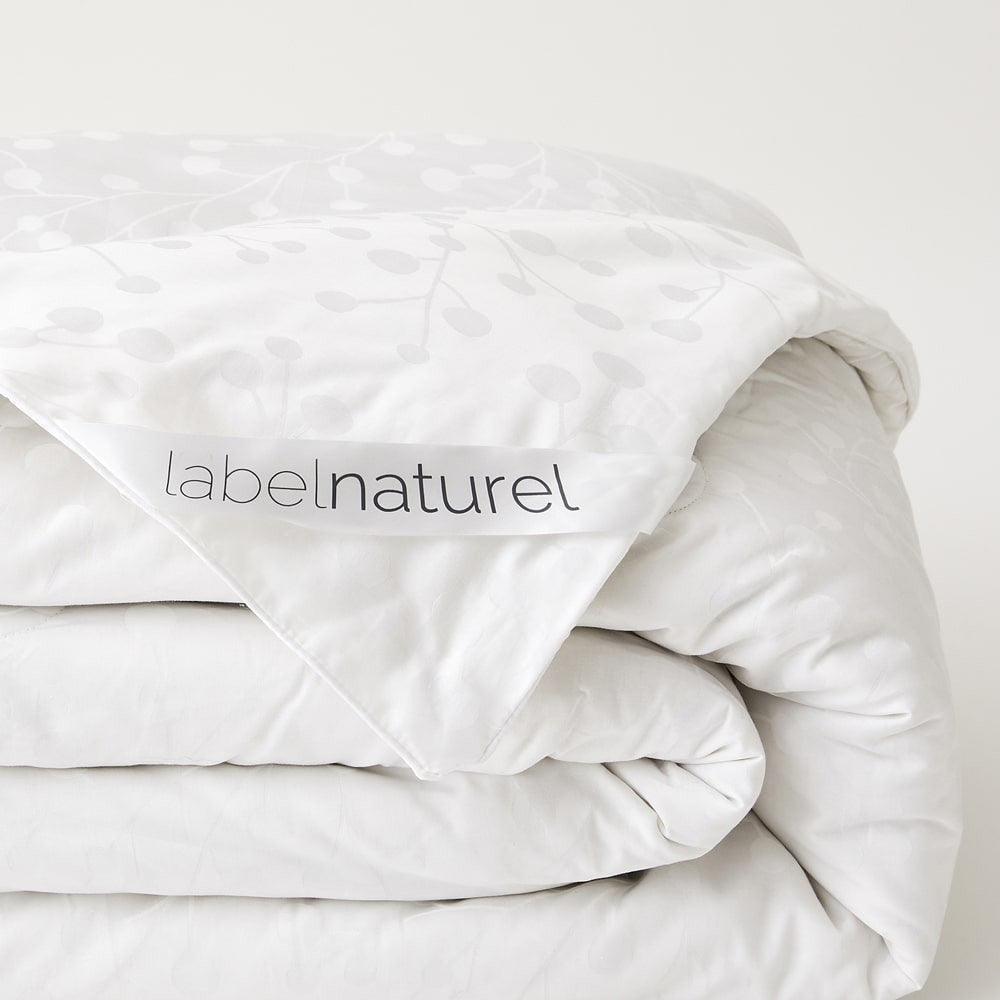
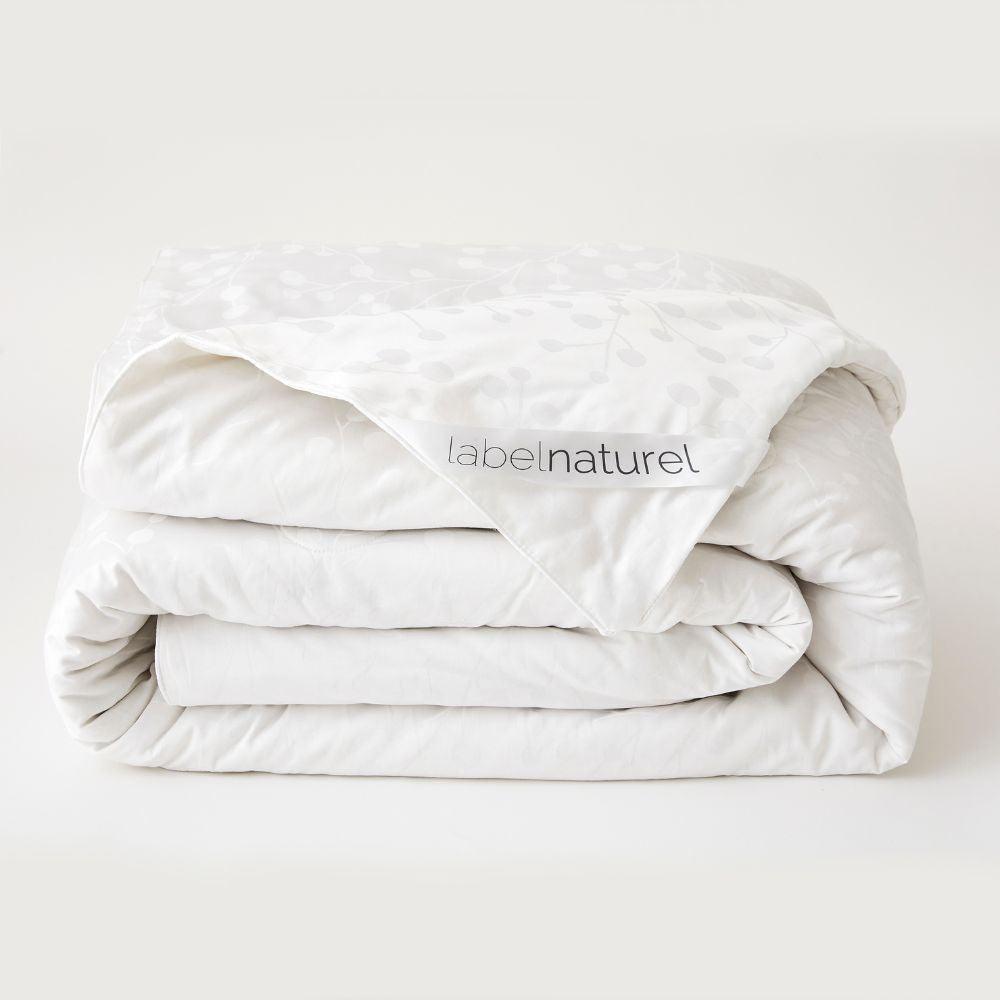
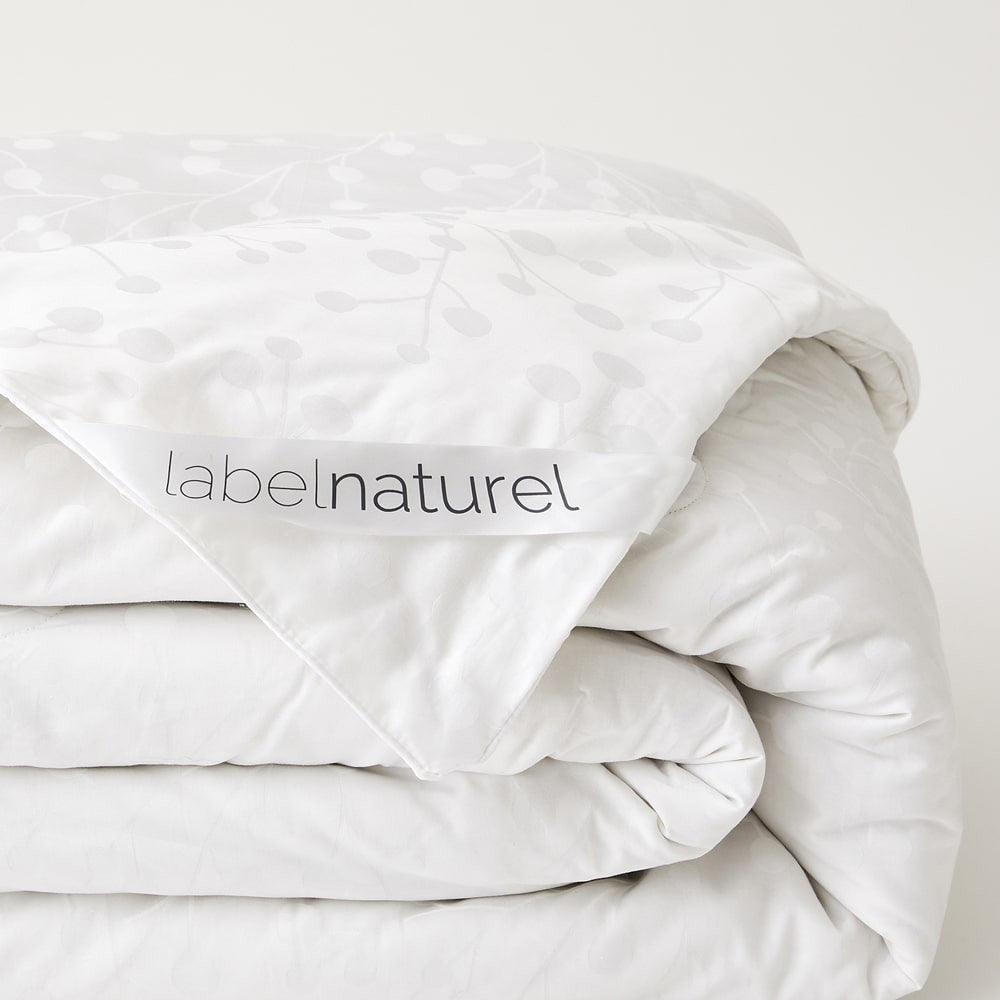
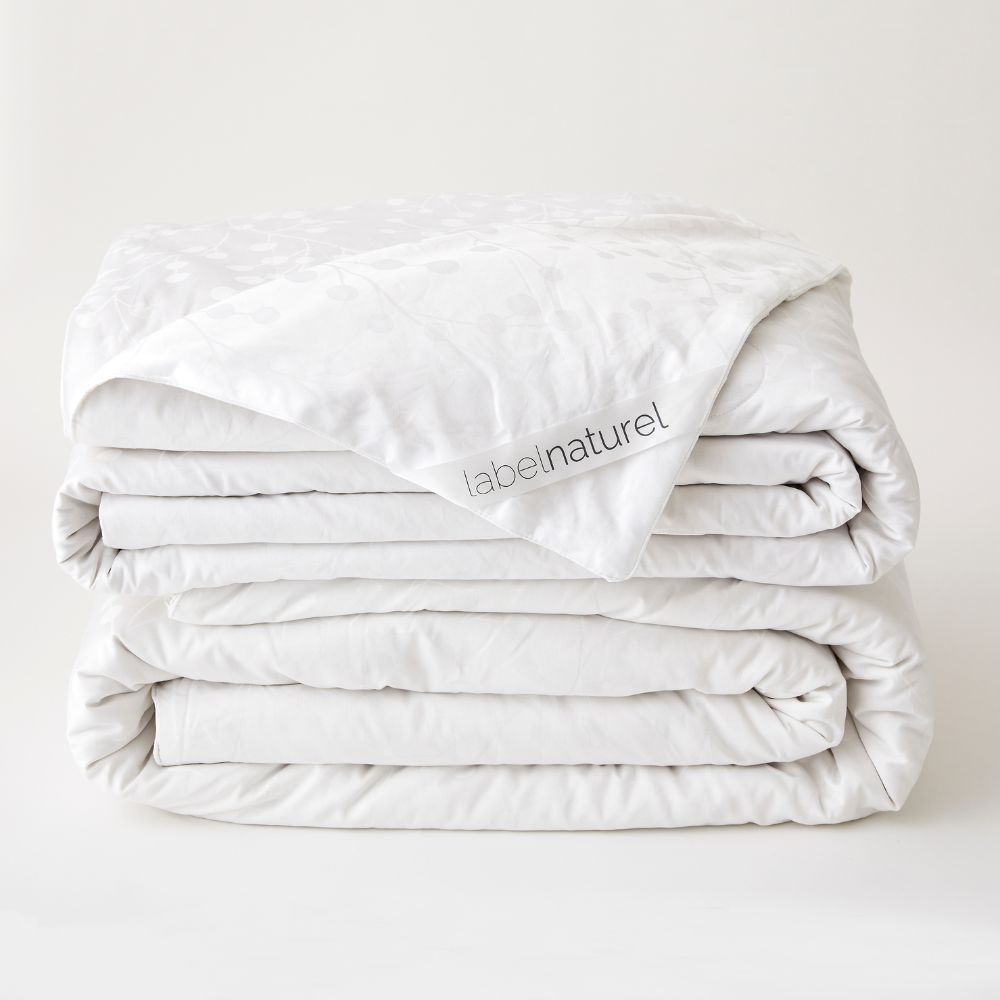
All that remains is to insert the layers of silk into a carefully crafted cotton cover. This delicate process also requires special care and true craftsmanship. The cover is then sewn without any topstitching to prevent any thermal bridges.
Once again, this manufacturing choice guarantees you a high-end duvet that is much warmer and more supple than one filled with short fibers, which must be held in place with extensive topstitching—a process that stiffens the duvet and significantly reduces its ability to keep you warm.
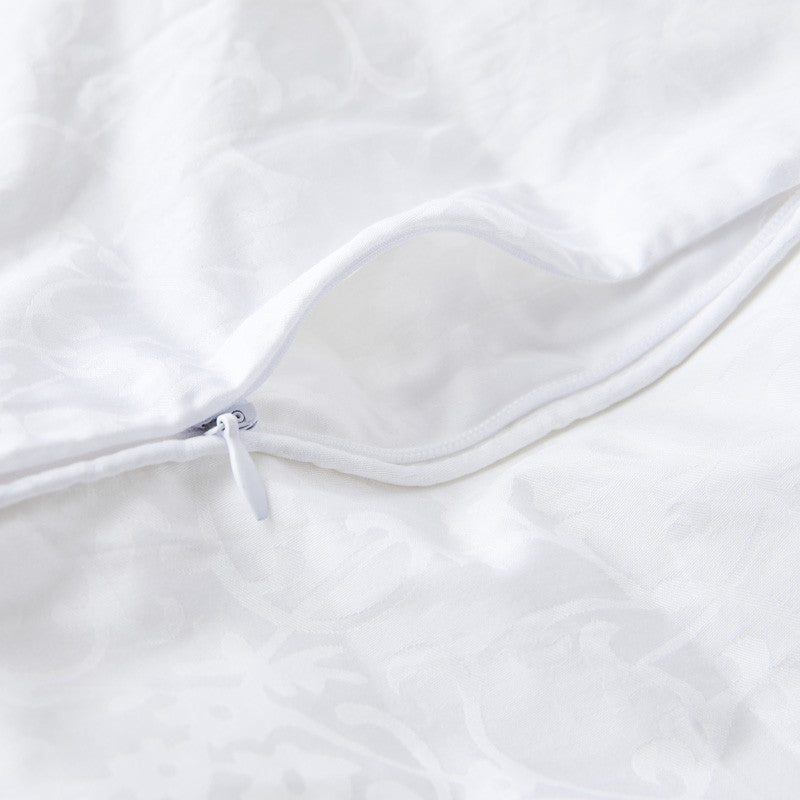
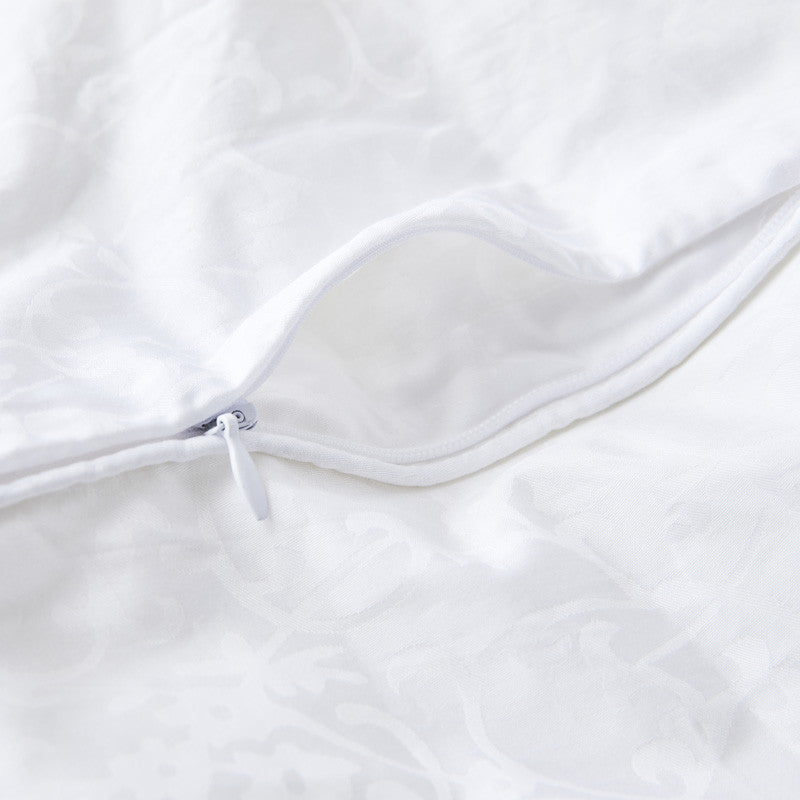
Because we’re confident in—and proud of—the exceptional quality of each of our duvets, we’ve included a small zipper on the side so you can see the silk inside!