


Silk in cosmetics: scientific understanding of its effects on the skin
Introduction
Although silk is first and foremost a luxury textile, its interest in cosmetics has a more concrete basis: silk is a protein fibersome of whose constituents (notably fibroin and the sericin) interact with the skin's surface. Without being a "miracle ingredient", silk is best known for its ability to improve comfort, à form a light protective film and support hydration by limiting water loss from the skin. The aim of this article is to explain simply, with a scientific eye, what silk really brings to a cosmetic formula - and how to choose a silk-based skincare product wisely.
Silk: a protein fiber of cosmetic interest
Silk (often from the cocoon of Bombyx mori) differs from plant fibers in that its composition is predominantly protein. This changes everything in cosmetics, as the skin itself is structured by proteins (keratin, collagen, etc.). As a result, silk proteins can have a good surface affinity with the stratum corneum, which explains their use in "comfort", "softness" and "skin barrier" oriented skincare products.
Fibroin and sericin: what are we talking about?
Silk is often grouped under a single word, but in practice it refers to two major families of proteins:
- Fibroin the "backbone" of silk thread. In cosmetics, it is valued for its ability to form a thin film on the skin's surface, with a perceptible "second skin" effect (smoother feel, more comfortable skin).
- Sericin the "glue" protein that surrounds the fibroin in the cocoon. It is more hydrophilic and is being studied for its interest in formulas aimed at thehydration and the flexibility of the skin.
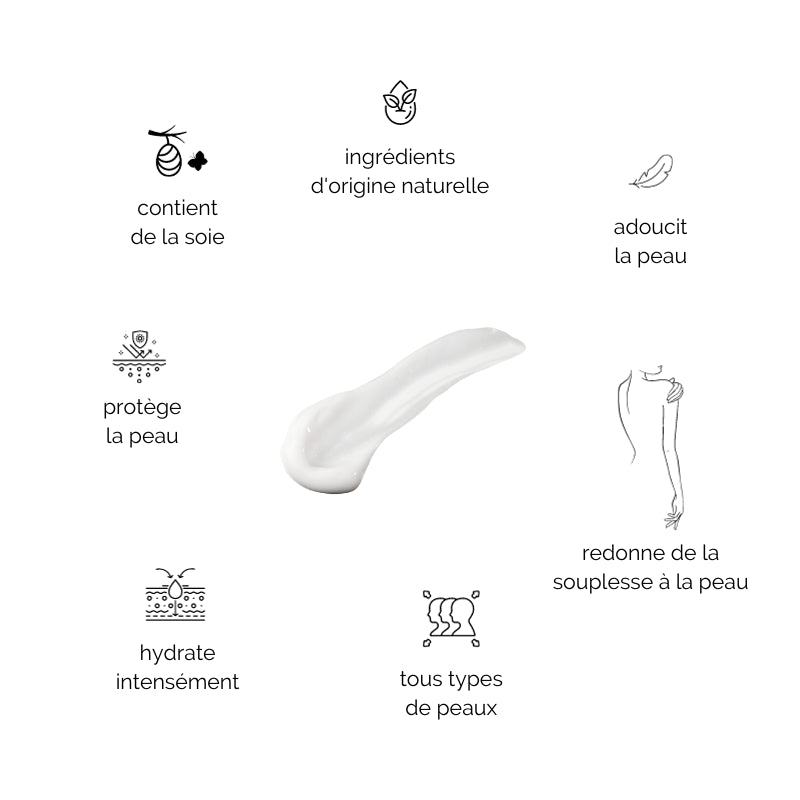
To remember: in cosmetics, silk is above all a functional ingredient (film, feel, comfort, help with water retention), rather than a "treating" active ingredient in the medical sense.
What forms does silk take in cosmetics?
On a label, silk can appear in different forms, with different behaviours on the skin:
- Silk powder contributes to sensoriality (silky touch), finish and comfort.
- Silk proteins / hydrolyzed proteins smaller fragments, used for their ability to improve the surface film and skin feel.
- Sericin / fibroin (depending on formulation): ingredients targeted for their specific properties (hydrophilicity, filmogenicity, etc.).
What effects does research attribute to silk proteins?
Hydration and water loss: the role of the protective film
Tight skin is not necessarily "oil-depleted": it may be losing too much water. This insensible water loss (TEWL) increases when the skin barrier is weakened. In this context, certain silk proteins are used to form a light protective film which helps the skin better hydration retention.
Important: this film is not intended to "suffocate" the skin. The cosmetic interest sought is a compromise: protection + comfortwith a pleasant finish and good tolerance.
Touch, surface smoothness and skin comfort
Skin doesn't need "spectacular promises" to change how it feels. In many formulas, silk is chosen for :
- a non-greasy feelsofter, more velvety,
- a surface smoothing (optical and tactile effects),
- improved comfort routine (less tightness, more supple skin).
This is precisely why silk is used in face, hand and body care products, when the aim is to achieve more comfortable skin. day-to-day.
Tolerance: why silk is often suitable for sensitive skin
Silk proteins are generally considered to be well-tolerated in cosmetic applications, notably because they have a "surface" action and can be integrated into gentle formulas. For sensitive or fragile skin, the benefits are twofold:
- reduce discomfort through light protection,
- improve the acceptability of care through soothing sensoriality.
Essential nuance: tolerance always depends on the overall formula (fragrance, preservatives, surfactants, etc.). Silk can be an excellent comfort ingredient, but it cannot "correct" an unsuitable formula on its own.
Choosing the right silk cosmetics
Read the INCI: silk powder, hydrolyzed proteins, sericin...
To understand what silk does (and doesn't) in a product, reading the INCI list is your best tool. Look for statements that are consistent with your needs:
- for comfort and touch silk powder / poudre de soie,
- for surface film and flexibility Silk proteins / hydrolyzed silk,
- for "sensitive skin" formulas sericin / fibroin (depending on the case), in a gently formulated base.
And above all: a good product never relies on a single ingredient. Perceived effectiveness often comes from a combination of formulation balance (humectants + emollients + texture agents + film-formers).
Made in France: a plus (without confusing origin with efficiency)
The scientific relevance of silk does not depend on the country of manufacture. However, the made in France can be a additional argument to choose a silk-based cosmetic, as it is often associated with :
- a traceability made easy,
- high requirements in terms of quality control,
- a strict manufacturing and labeling framework,
- formulating expertise (stability, sensoriality, safety of use).
Our silk-based cosmetics: the Maison de la Soie selection
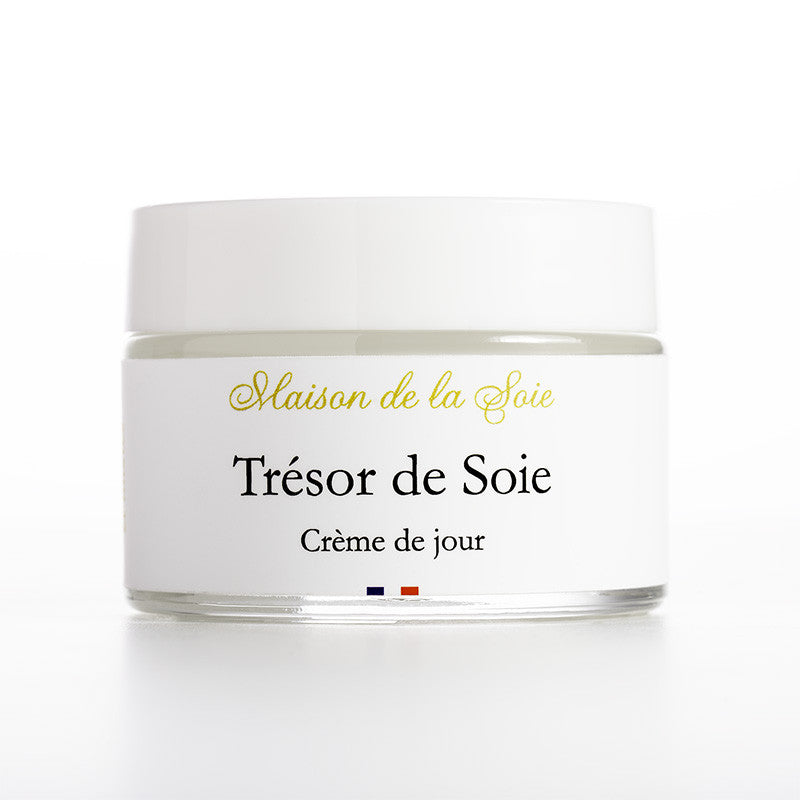
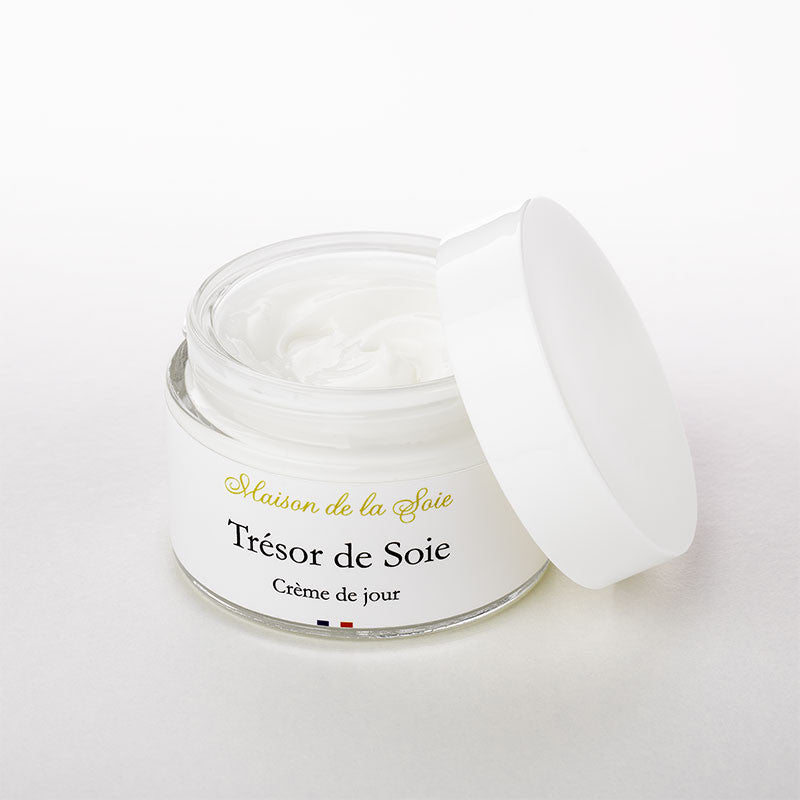
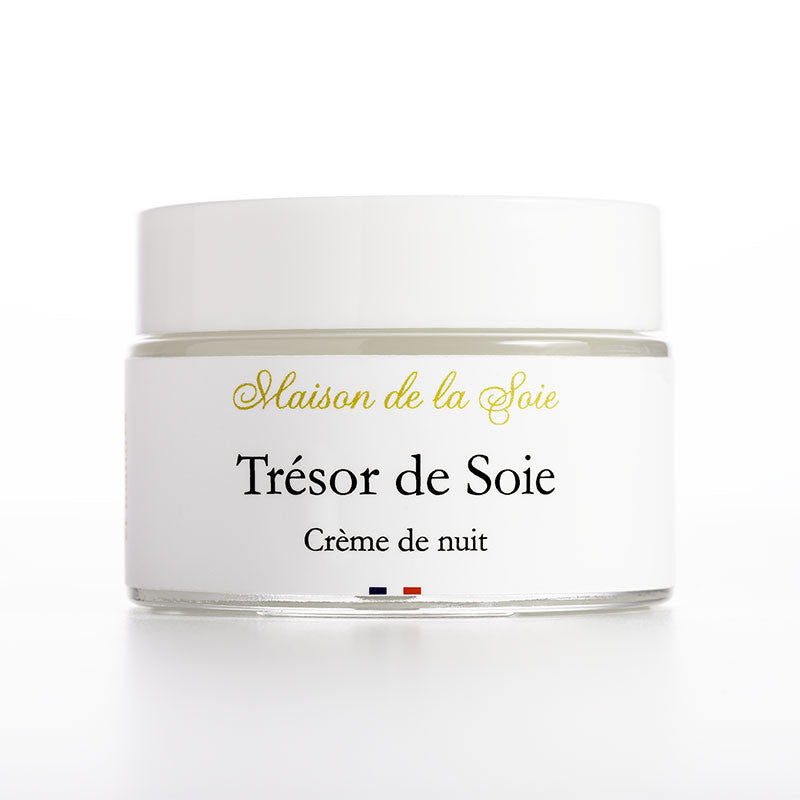
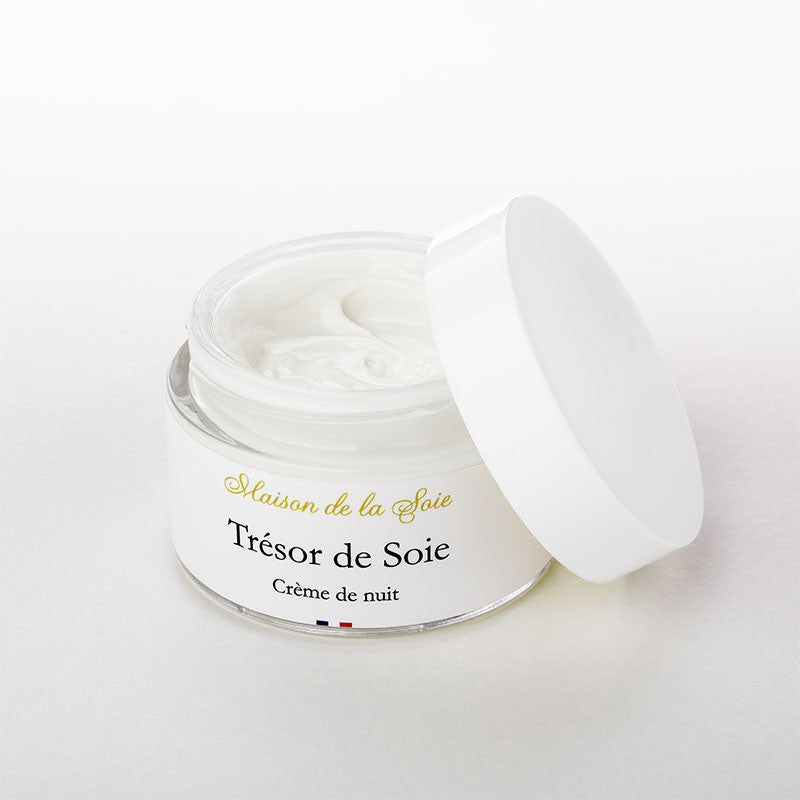
At Maison de la Soie, silk isn't there to look pretty: it's integrated for its own sake. functional (comfort, feel, light protective film) in care products designed for regular use.
Products to discover
Here are some silk-based skincare products you can find on our website:


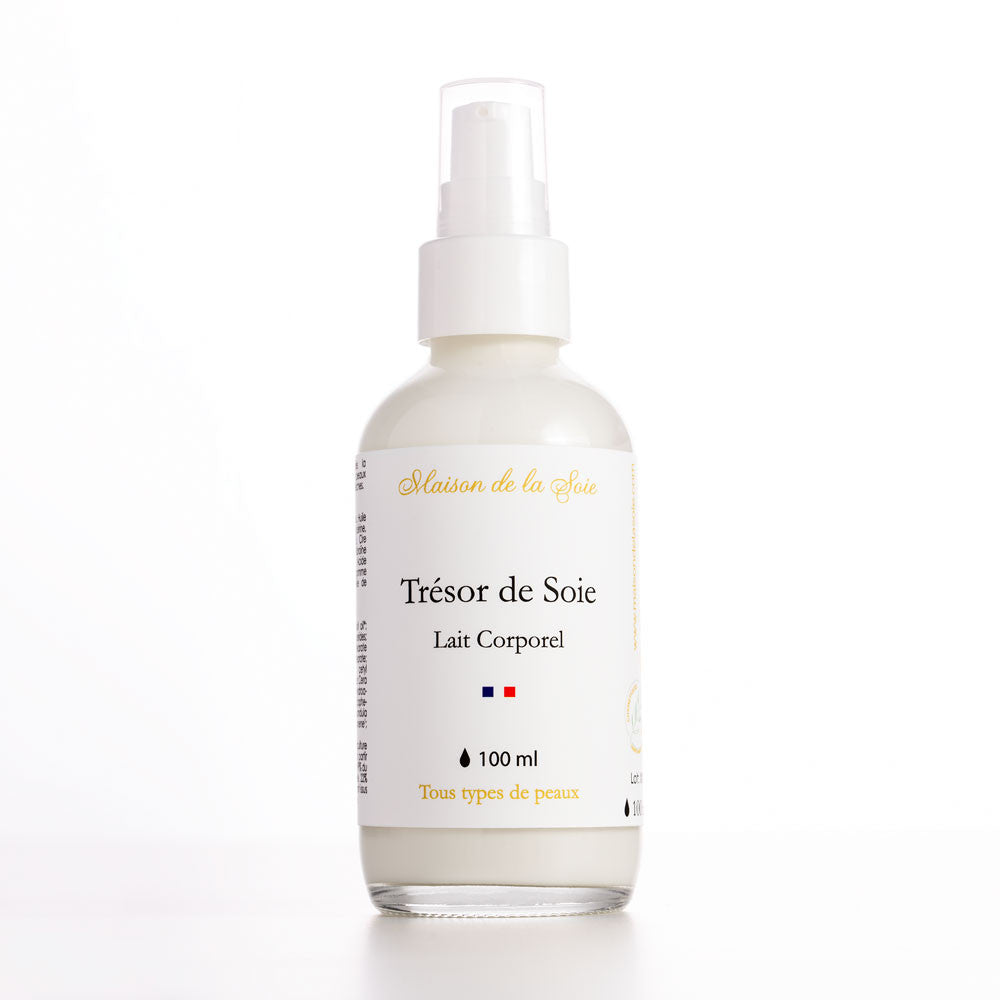


How to integrate them into your routine
- The morning On clean skin, first apply your serum (if used), then your day cream. Finish with sun protection if necessary.
- In the evening After cleansing, apply serum, then a more enveloping texture (night cream) to maximize nighttime comfort and limit water loss during sleep.
- Serum: once or twice a day? The serum can be used once a day (often in the evening) or morning and evening, depending on the condition of the skin, its level of dehydration and the season.
- Body A silk-based body lotion is best applied after a shower, when the skin is still slightly damp and more receptive to the comfort film.
- Hands A silk-based hand cream can be used as often as necessary, especially after washing. Silk helps restore skin comfort and protect it from daily aggressions, without leaving a greasy residue.
Silk, the science of skin comfort
Light protective film, non-greasy feel, moisture support: silk is a precious cosmetic ingredient when properly formulated. Discover our silk-based skincare products, designed for everyday use.
Conclusion
Silk in cosmetics is better understood when we leave behind the slogans and look at its nature: a protein-rich material used to create formulas geared to the skin's needs. comfort, sensoriality and hydration support. Well-chosen and well-formulated, it accompanies the skin without aggressing it. A particularly relevant approach for modern routines that seek effectiveness without overstimulation.
FAQ
Does silk really moisturize the skin?
What's the difference between silk powder and hydrolyzed silk proteins?
Is silk suitable for sensitive or reactive skin?
Is silk an "anti-ageing active ingredient"?
Why choose a silk-based cosmetic made in France?
Silk in cosmetics: a discreet ingredient that raises more and more questions
We've opened the discussion within our Reddit community to gather your feelings, experiences and questions about silk in cosmetics.
👉 Find the full publication on Reddit and share your opinion: whether you've already tested silk-based skincare or the subject simply resonates with you, your feedback is invaluable. :
Silk in cosmetics: what does it really do for the skin?
byu/cmo_maisondelasoie inMaisondelaSoie
Leave a comment