



Silk is renowned for its softness and protective properties. Pillowcases, scarves, and nightcaps are often touted as miracle accessories for hair. But does silk really help with alopecia (hair loss and regrowth)? Here’s what the research and dermatologists say, along with practical tips and our product recommendations.
Table of Contents
- Silk and Hair: An Ally Against Breakage
- Silk and Hair Loss: What the Experts Say
- Can Silk Stimulate Hair Regrowth?
- Silk: Comfort Even Without Hair
- Conclusion
- FAQ
- Related Articles
Silk and Hair: An Ally Against Breakage
Silk’s smooth surface reduces friction compared to rougher fabrics like cotton, which can help minimize tangles, frizz, and breakage, according to experts (Sleep Foundation, “Benefits of a Silk Pillowcase,” 2023). Silk also absorbs very little moisture, which helps preserve natural oils and hydration.
Incorporate into your routine: our silk pillowcases to minimize mechanical stress while you sleep.
Why Silk Is Different from Cotton
Unlike cotton, whose spun fibers have micro-roughness, mulberry silk is a continuous, smooth fiber. As a result, it reduces friction and provides special protection for fragile, dry, or curly hair.
Tips for nighttime use
- Choose a silk pillowcase with a thread count of at least 19 mommes for the best balance of softness and durability.
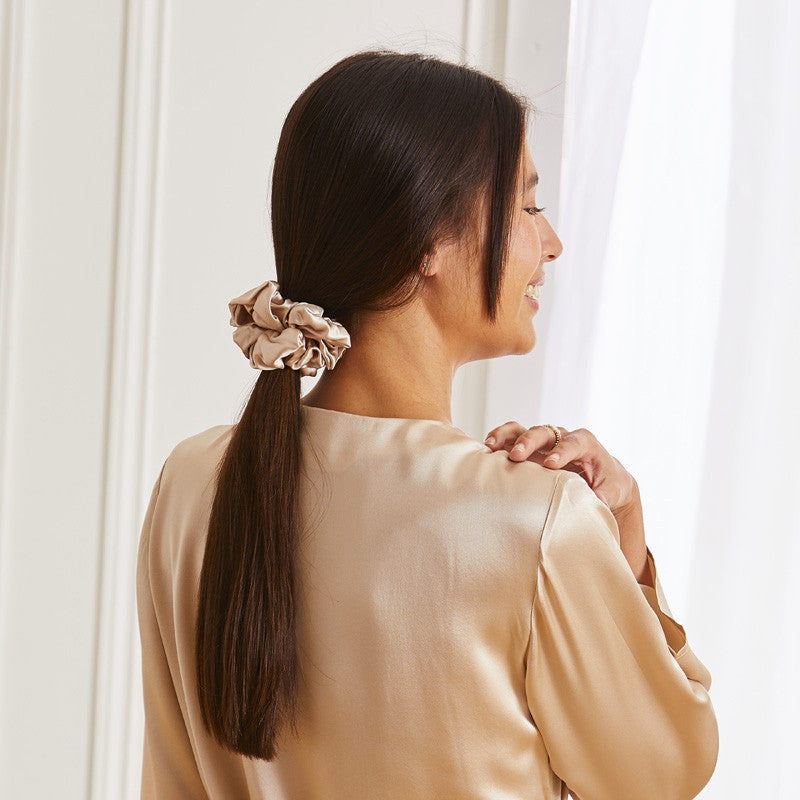
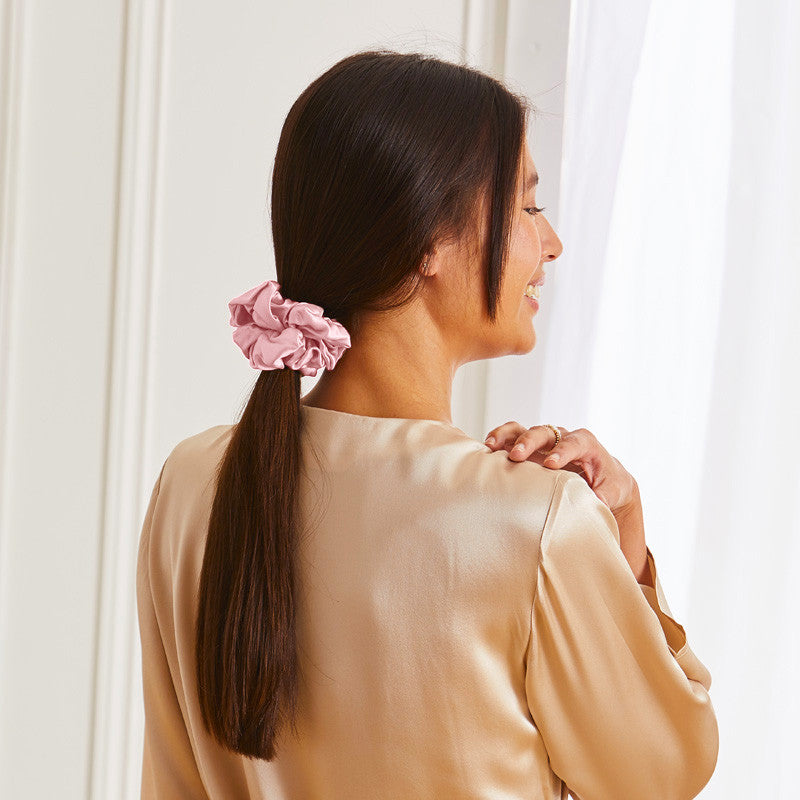
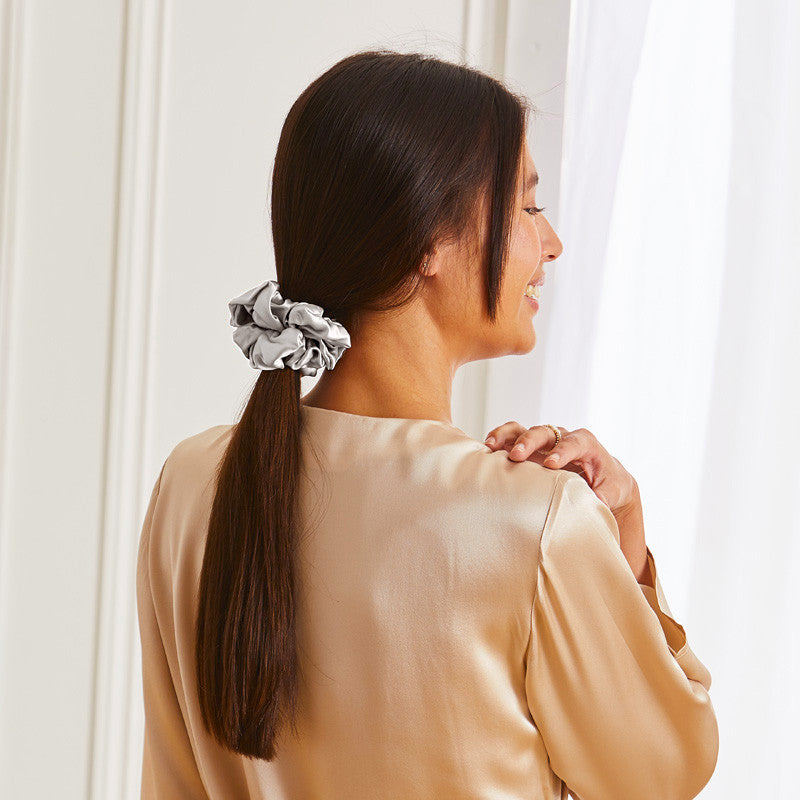
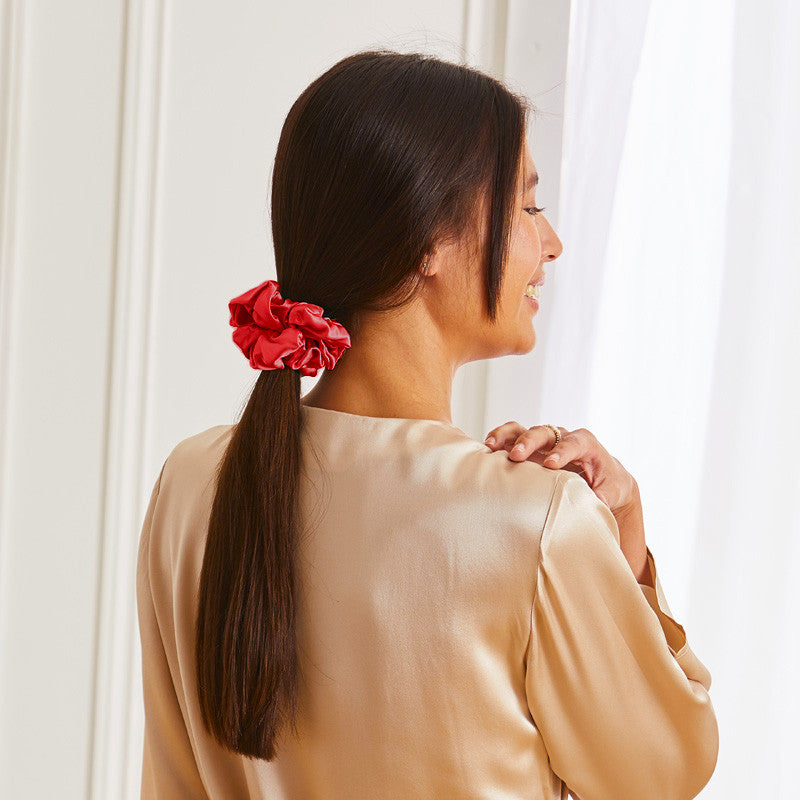
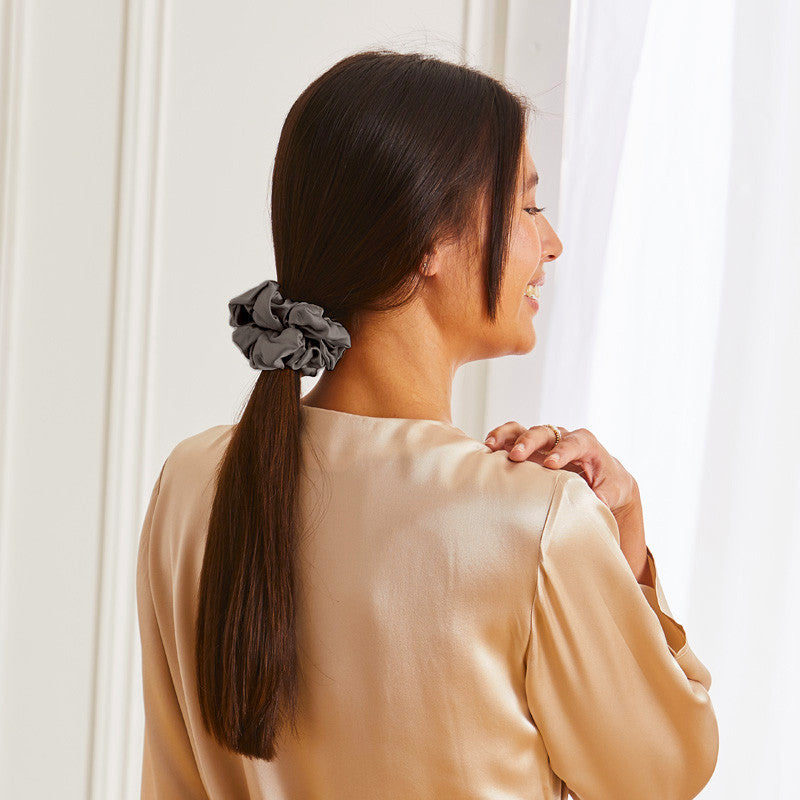
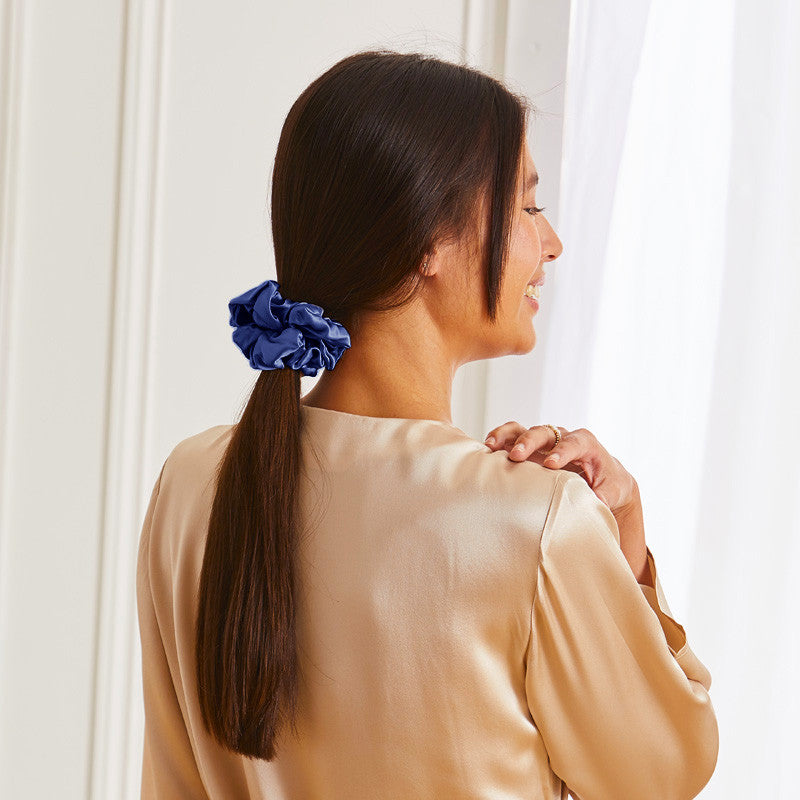
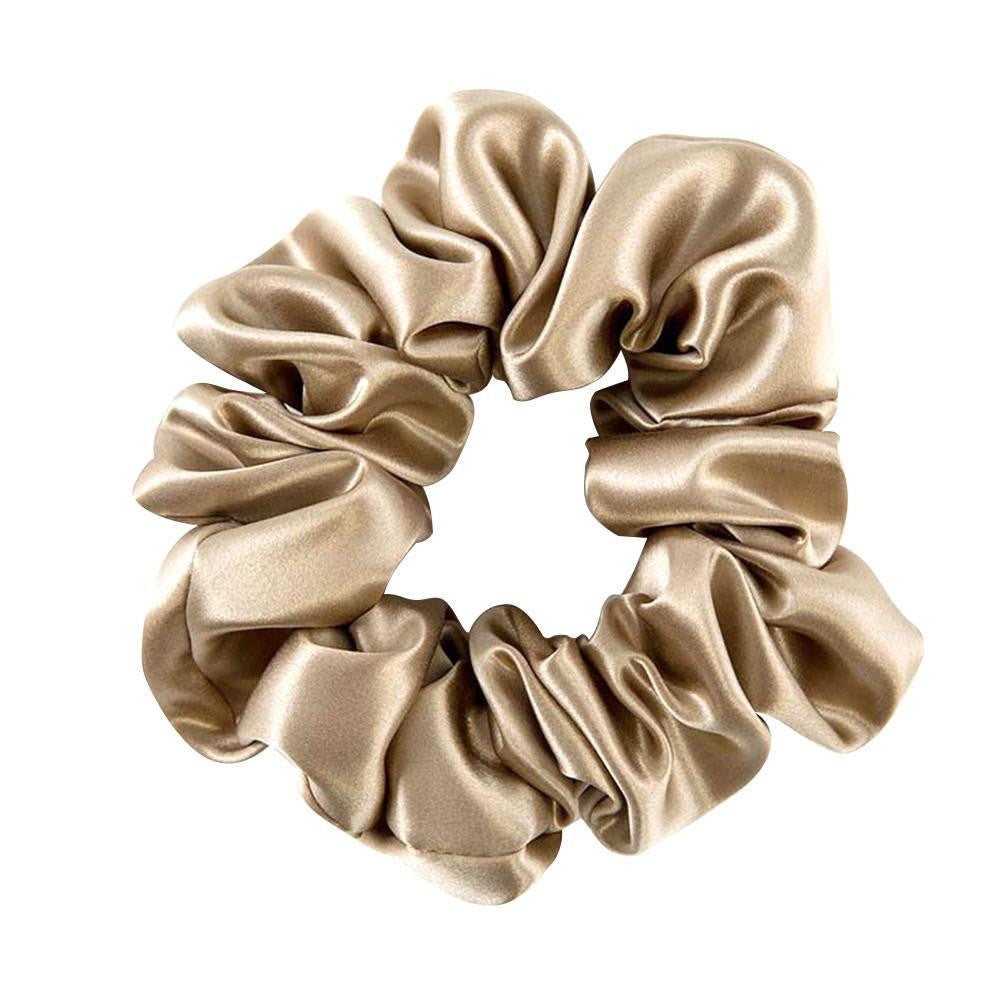
- If you wear protective hairstyles, replace the standard hair tie with a silk scrunchie to prevent marks and breakage.
- If you have frizzy, textured, or dry hair, a silk nightcap helps retain moisture and reduce frizz.
Silk and Alopecia: What the Experts Say
Alopecia (androgenetic and alopecia areata) is caused by internal genetic, hormonal, or immune mechanisms. Dermatologists emphasize that no silk or cotton pillowcase can stop hair loss caused by these factors. In short, silk does not cure alopecia or trigger regrowth; its primary function is to protect existing hair.
Focus on Baldness (Androgenetic Alopecia)
Baldness is one of the most common forms of alopecia. It occurs when hair follicles (the roots of the hair) become sensitive to a testosterone-derived hormone called DHT (dihydrotestosterone). This sensitivity leads to a shortened hair growth cycle: each new hair grows for a shorter period, becomes thinner, and eventually stops growing altogether. It is this progressive process that explains the thinning of the scalp over the years. Approved treatments for promoting regrowth and slowing hair loss (minoxidil, finasteride, immunotherapies, transplants) remain the gold standard. Silk, however, can help preserve the hair’s appearance by reducing breakage in thinner hair.
In short, silk does not cure alopecia or trigger hair regrowth; its primary function is to protect existing hair.
Silk and Traction Alopecia
Traction alopecia is caused by repeated mechanical stress (tight braids, buns, rigid accessories). Reducing traction is a priority. A silky environment helps limit further breakage.


Can silk stimulate hair regrowth?
No scientific studies have shown that silk can directly stimulate hair growth. Medically validated treatments for hair regrowth (minoxidil, finasteride, immunotherapies) remain the gold standard. Silk acts more as a preservative: it protects existing hair or hair that is regrowing, particularly when it is fine and fragile. A silk nightcap can thus protect fragile new growth after alopecia areata or chemotherapy.
Silk: Comfort Even Without Hair
Even in cases of total hair loss—whether due to advanced alopecia, chemotherapy, or another medical condition—silk remains highly beneficial. Its exceptionally soft texture minimizes direct friction against the bare scalp, which is often more sensitive and prone to irritation. Sleeping on a silk pillowcase or wearing a silk nightcap provides a sense of comfort, reduces redness, and promotes a more restful sleep. More than just an accessory, silk becomes a protective caress, providing well-being and comfort where the skin needs it most.
Conclusion
Silk is a valuable ally: it reduces breakage and improves scalp comfort. To date, there is no evidence that it prevents pathological alopecia or directly stimulates regrowth. Therefore, we recommend combining it with appropriate dermatological care for best results.
Treat your hair to softness and protection
Reduce breakage, lock in moisture, and care for your fragile hair with silk accessories. Treat yourself to a natural and elegant nighttime beauty routine.
Leave a comment